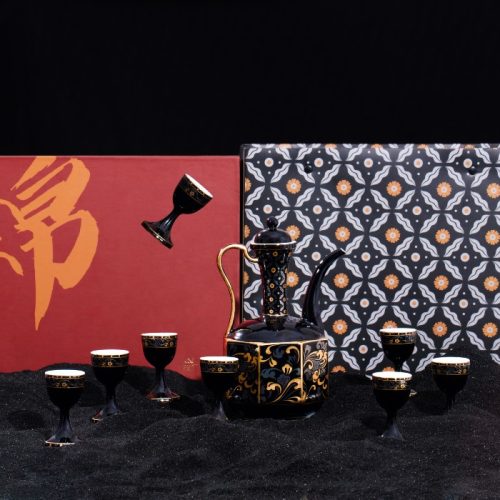

Taoxichuan- Kangxi Emperor . Twelve Months Flower Cups Blind Box
2025 年 11 月 15 日
Wuyishan – Mountain Stream Wild Tea
2025 年 11 月 16 日
Taoxichuan – Imperial Treasures Blind Box
$46.00
10 Styles: Blue and White / Famille Rose
Blue and White:
- Yuan Dynasty Blue and White Gourd-Shaped Vase with Floral Design (Fortune and Prosperity for Generations)
- Qing Dynasty Qianlong Imperial Kiln Blue and White Celestial Globe Vase with Five Blessings and Nine Peach Design
- Ming Dynasty Xuande Blue and White Plum Vase with Sea and Cloud Dragon Design
- Yuan Dynasty Blue and White Large Jar with Fish and Algae Design
- Ming Dynasty Xuande Blue and White Yuhuchun Vase with Floral Design (Four Seasons)
Famille Rose Ceramic :
- Qing Dynasty Qianlong Famille Rose Gourd-Shaped Vase with “Fortune and Prosperity for Generations” Design
- Ming Dynasty Jiajing Five-Color Large Jar with Fish and Algae Design
- Qing Dynasty Jiaqing Famille Rose Plum Vase with Scrolling Lotus Design
- Qing Dynasty Guangxu Famille Rose Jade Pot Spring Vase with Hundred Butterflies Design
- Qing Dynasty Qianlong Famille Rose Nine Peach Vase
10 Styles: Blue and White / Famille Rose
Blue and White:
-
Yuan Dynasty Blue and White Gourd-Shaped Vase with Floral Design (Fortune and Prosperity for Generations)
-
Qing Dynasty Qianlong Imperial Kiln Blue and White Celestial Globe Vase with Five Blessings and Nine Peach Design
-
Ming Dynasty Xuande Blue and White Plum Vase with Sea and Cloud Dragon Design
-
Yuan Dynasty Blue and White Large Jar with Fish and Algae Design
-
Ming Dynasty Xuande Blue and White Yuhuchun Vase with Floral Design (Four Seasons)
Famille Rose Ceramic :
-
Qing Dynasty Qianlong Famille Rose Gourd-Shaped Vase with “Fortune and Prosperity for Generations” Design
-
Ming Dynasty Jiajing Five-Color Large Jar with Fish and Algae Design
-
Qing Dynasty Jiaqing Famille Rose Plum Vase with Scrolling Lotus Design
-
Qing Dynasty Guangxu Famille Rose Jade Pot Spring Vase with Hundred Butterflies Design
-
Qing Dynasty Qianlong Famille Rose Nine Peach Vase
Chinese ceramic culture has a long history, with Jingdezhen porcelain production as its representative. The saying "Xinping pottery making began in the Han Dynasty" refers to the origin of pottery making in Jingdezhen. Starting in 1004 during the Northern Song Dynasty, Jingdezhen's porcelain production gained the approval of Emperor Zhenzong, who bestowed the reign title "Jingde" upon Changnan Town. From then on, the name "Jingdezhen" became renowned both domestically and internationally. The imperial families of various dynasties were fascinated by the pinnacle of Jingdezhen's art. Today, Jingdezhen porcelain is a prominent feature in major museums and auctions in China and around the world. These "unattainable" national treasures are now miniature versions, fired at 1320°C, resulting in thin, translucent bodies and exquisite designs. This allows the general public to collect these "national treasures," viewing them from afar and handling them up close.

Yuan Dynasty Blue and White Porcelain Gourd-Shaped Vase with Scrolling Floral Design (symbolizing prosperity and longevity)
The gourd shape is graceful, flowing, and full of variation. It symbolizes numerous offspring, continuous generations, and an enduring dynasty. The vase is shaped like a gourd, inspired by the natural shape of the auspicious fruit. Decorated entirely in blue and white, its shape, a homophone for "good fortune and prosperity," carries the connotation of "blessing." Resembling the Chinese character for "auspicious," it is also known as the "Great Auspicious Vase," signifying great fortune and prosperity. Popular and universally appealing, its continued production throughout history has made it a traditional vessel shape.

Qing Dynasty Qianlong Imperial Kiln Blue and White Porcelain Celestial Globe Vase with Five Blessings and Nine Peaches
Qianlong blue and white porcelain is renowned for its "stability, robustness, and composure." The blue and white glaze of this nine-peach celestial globe vase is very similar to that of the Yongzheng period. The vase has a small mouth, straight neck, full shoulders, and a slightly concave foot. The base is inscribed with "Made in the Qianlong Reign of the Great Qing Dynasty," making it a fine example of Qianlong imperial kiln porcelain. Peaches symbolize good fortune and longevity, and nine, being the extreme of Yang numbers, represents abundance and infinity in ancient times. Therefore, the nine-peach design signifies boundless longevity. The five bats represent the five blessings and the supreme status of the emperor.

Ming Dynasty Xuande Blue and White Porcelain Plum Vase with Dragon and Cloud Design
Adopting the traditional plum vase shape, the entire vase is decorated with blue and white enamels, featuring exquisite dragon patterns and simple lines, showcasing the superb craftsmanship and ultimate aesthetics of ancient imperial kilns. A Priceless Historical Background: The Ming Dynasty Xuande blue and white dragon-patterned plum vase is one of the finest examples of Chinese imperial kiln porcelain. It was not only a precious cultural relic officially mailed overseas during the Yongle and Xuande periods, but also a collection item of Chinese princes and empresses. It not only embodies the essence of traditional Chinese culture but also bears witness to the historical development of Chinese porcelain making techniques and aesthetics.

A Yuan Dynasty Blue and White Porcelain Jar with Fish and Algae Design
This jar has a straight mouth, short neck, full shoulders, and a bulging belly that tapers towards the base. It is glazed both inside and out, giving it a stable, dignified, and imposing appearance. The walls are relatively thick, and the unglazed base is a characteristic Yuan Dynasty foot-cutting technique. Three sides of the jar are decorated with large aquatic plants, while the center features three different fish: a killifish, a mackerel, and a carp, adorned with algae patterns. The three fish are depicted in varying poses and with distinct shades, creating a sense of light and shadow and a three-dimensional visual effect. A band of wave patterns is painted around the neck, a popular motif on Song and Yuan dynasty porcelain and bronzes, also seen on a large vase in the British Museum bearing the inscription "11th year of the Zhizheng era." This distinctive wave pattern is an important basis for identifying Yuan blue and white porcelain.

Ming Dynasty, Xuande Period, Blue and White Porcelain Vase with Floral Scroll Design
The vase has a flared mouth, slender neck, rounded belly, and a ring foot. From top to bottom, the body is decorated with blue and white ruyi-head patterns, meander patterns, scrolling grass patterns, floral scrolls, and lotus petal patterns. This vase has a dignified shape, elegant decoration, a full composition, and clear layering. The original blue and white porcelain used imported cobalt blue pigment, resulting in a rich and deep color, characteristic of early Ming Dynasty blue and white porcelain.

A Qianlong Period (1736-1745) Famille Rose Gourd-Shaped Vase
The body is decorated with intertwined vines and gourds. The vines and leaves are painted in varying shades of green, the gourds are painted yellow with brown spots, and bats are painted red, their postures varying in height. The base is left blank with a six-character seal mark in red: "Made in the Qianlong Reign of the Great Qing Dynasty." Qianlong imperial kilns favored auspicious patterns for decoration. In the eighth year of Qianlong's reign (1743), the emperor ordered the imperial kilns to ensure that the patterns on porcelain were "each according to the season and auspicious designs." Therefore, the gourd shape of this piece carries auspicious connotations due to the homophony of "gourd" and "good fortune," while the bats also symbolize "good fortune," hence the name "Wanfu" (meaning "ten thousand blessings").

Ming Dynasty, Jiajing Period, Large Five-Color Fish and Algae Pattern Jar
The five-color fish and algae pattern jar features a clear hierarchy of designs. The neck is decorated with a band of stylized lotus petals, while the body is painted with a combination of underglaze blue, jujube red, delicate green, and beige glazes depicting fish, algae, and lotus flowers. Eight red fish, each in a different pose, swim among the algae. These red fish are painted with a yellow background, their outlines and scales outlined in brown, demonstrating exquisite craftsmanship. Some fish swim forward, while others turn back, conveying a sense of dynamism. The blank spaces on the jar are decorated with algae and lotus patterns; large green lotus leaves and budding flowers create a beautiful scene of fish playing among the algae. The base of the jar is decorated with a band of banana leaf patterns in underglaze blue, adding an elegant and understated touch.

A Qing Dynasty, Jiaqing Period, Famille Rose Plum Vase with Lotus Scroll Design
This vase has a small mouth, short neck, full shoulders, and a slender waist, with a plump and elegant shape and smooth, flowing lines. The main decoration on the exterior is a scrolling lotus scroll design, interspersed with blue bat motifs. The famille rose enamels are vibrant, and the blue enamels are striking, creating a festive and auspicious atmosphere. The design symbolizes good fortune, as the bat is a homophone for "fortune," signifying longevity and good fortune. The design is meticulously arranged with clear layers, complementing the vase's graceful shape and creating a strong three-dimensional effect. The foot rim bears a blue-and-white mark reading "Made in the Jiaqing Reign of the Great Qing Dynasty," written fluently and freely, with a structure conforming to ancient styles. It fully reflects imperial taste and is a fine example of imperial kiln porcelain from the Jiaqing period.

Qing Dynasty, Guangxu Period, Famille Rose "Hundred Butterflies" Yuhuchun Vase
During the late Qing Dynasty, the rulers were deeply fond of this decorative motif, and the "hundred butterflies" pattern appeared on porcelain and court clothing, creating a grand spectacle. These vessels typically have an everted rim, long neck, globular body, and ring foot. Because blue-and-white porcelain of this style was often used as a gift starting from the Yongzheng Emperor, it is also known as a "reward vase." In addition to blue-and-white porcelain, famille rose porcelain was particularly popular in the late Qing Dynasty. The motifs differed from the intertwined floral patterns of blue-and-white porcelain, often featuring dragons and phoenixes, clouds and dragons, bats, and colorful butterflies. Bats and butterflies covered the entire vessel; although not exceeding one hundred, they symbolized "hundred blessings" and "hundred butterflies," representing auspicious wishes for abundant blessings and celebration.

A Qianlong Period (1736-1745) Famille Rose Vase with Nine Peaches
The vase is entirely glazed in white. A peach tree is painted on the body, its branches and leaves flourishing, winding upwards from the base to the belly. Nine large peaches weigh down the branches. The painted composition is spacious and well-balanced, with varying shades of glaze. The painting is exquisite and skillful, making it a representative work of Qianlong famille rose porcelain. Peaches symbolize good fortune and longevity, and nine, being the extreme of Yang numbers, represents abundance and infinity in ancient times. Therefore, the nine-peach design carries the auspicious meaning of boundless longevity. Similar artifacts are housed in the Palace Museum, the Jingdezhen Ceramic Museum, the Shenyang Palace Museum, and the Museum of Fine Arts, Boston, among others.
| 款式 Style | 粉彩 Famille Rose Ceramic, 青花 Blue and White |
|---|
Related products
-
Taoxichuan- Jin Gold and Silver
$3,576.00 -
Taoxichuan – Chunxiao Tableware
Price range: $599.00 through $839.00